Case study
দেনা-পাওনা · ব্যক্তিগত খরচ · বাংলা UI
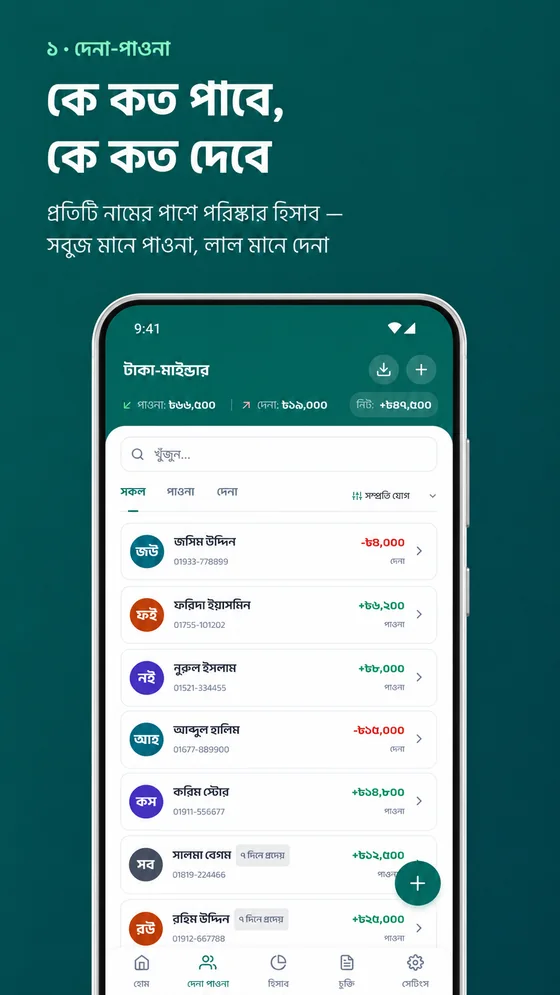
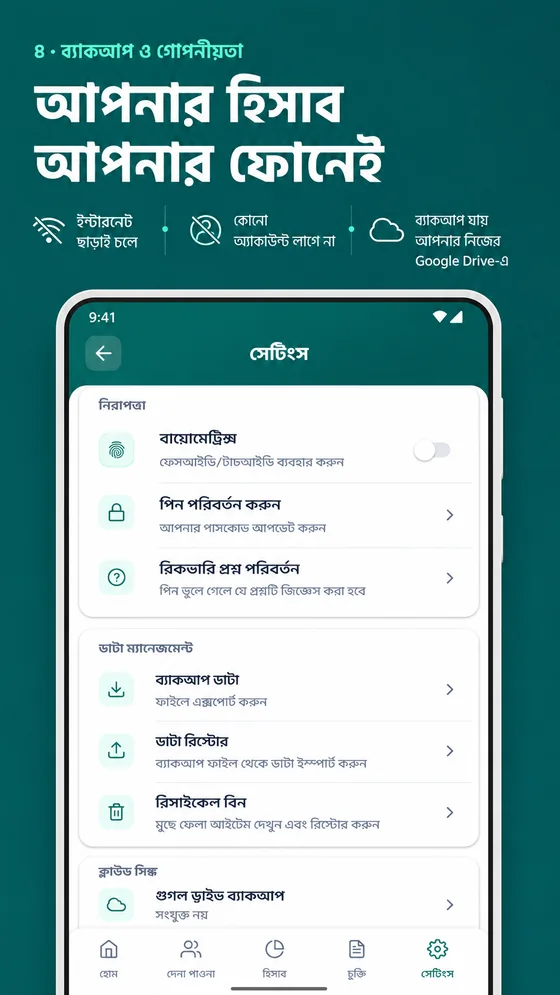
TakaMinder helps people stop guessing who owes what: lent money (Paona), borrowed money (Dena), settlements, accounts, and agreements live in one calm Bengali interface. Transaction history stays on-device by default; optional Drive sync is encrypted and user-controlled — no ads, no tracking.
Get on Google Play- Role
- Founder · Engineer
- Year
- 2026 — Present
- Platforms
- Mobile
- Status
- In production
Problem
Typical money trackers assume full-time connectivity, heavy accounting UX, or English-first flows. Shopkeepers, roommates, and families still rely on notebooks and scattered chats; losing the phone meant losing the ledger.
Solution
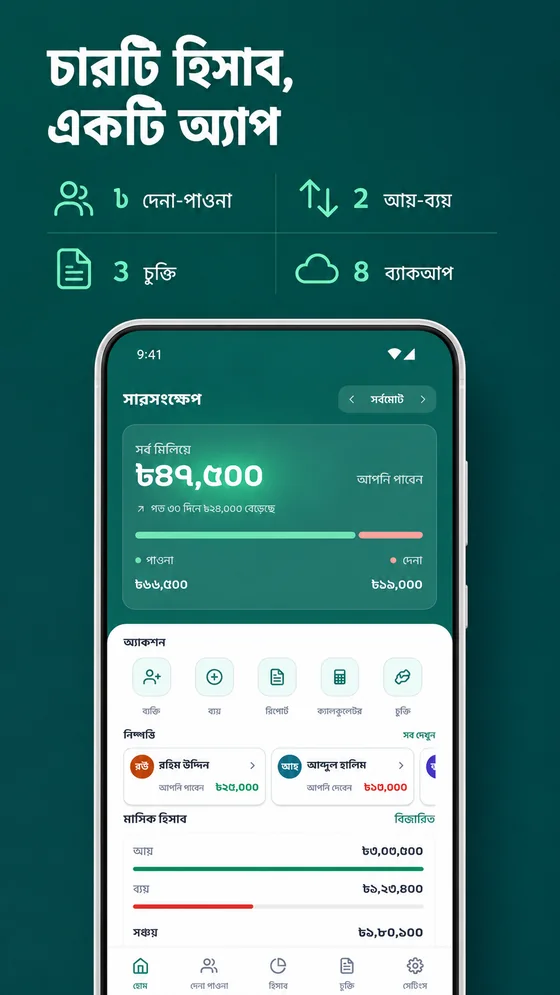
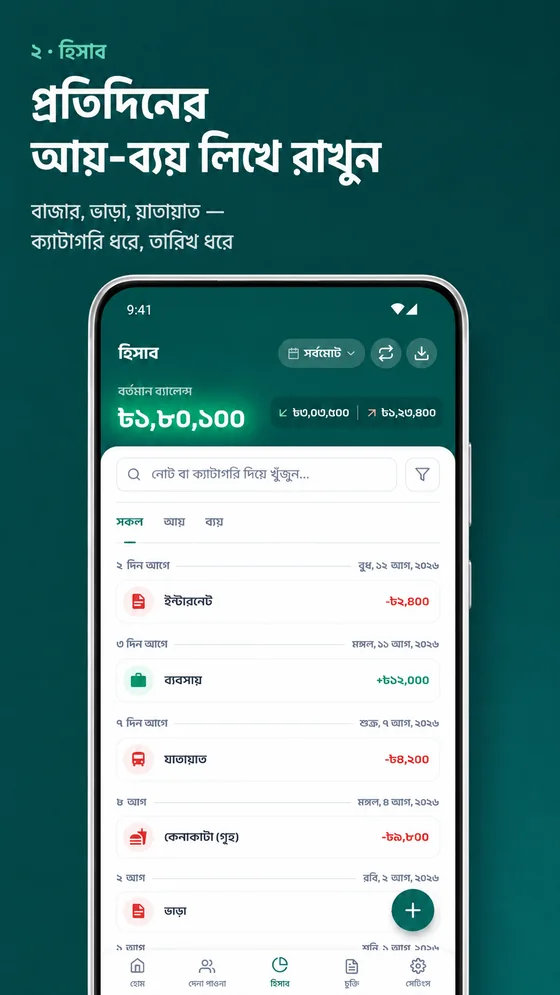
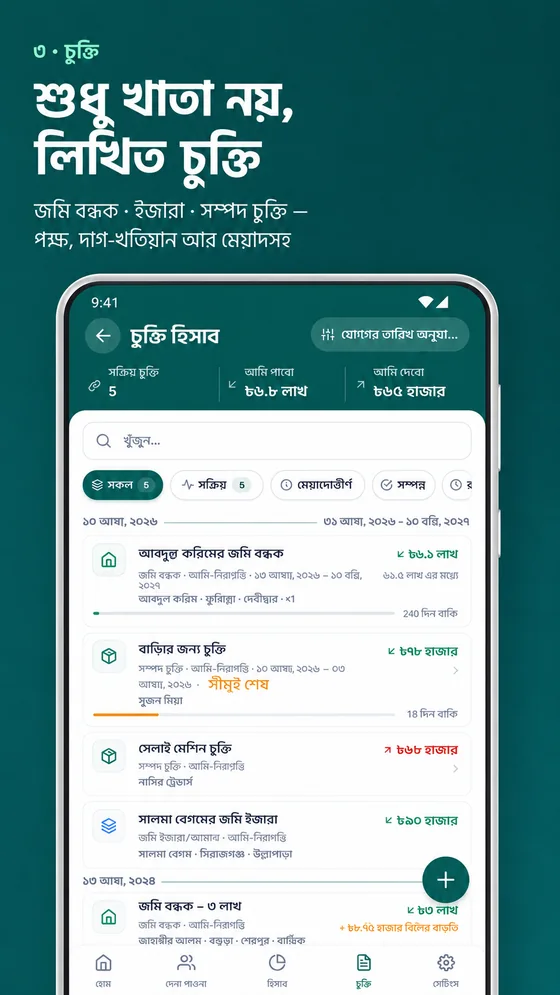
A React Native (Expo) app with local SQLite and conflict-aware sync paths, Bengali-first screens for dashboard, দেনা পাওনা, হিসাব, and চুক্তি flows, plus optional Google Drive backup and contact-backed entries so adding people stays fast.
Outcome
10K+ downloads in six months, strong Play ratings, featured in local fintech coverage — shipped solo and bootstrapped on the Google Play Store.
What I shipped.
I designed and built the entire mobile product end-to-end in React Native and Expo — UI, navigation, data layer, backup flows, and release pipeline.
What makes it work.
11 features →
100% offline-first: ledgers stay on your phone unless you opt into backup
Optional encrypted Google Drive sync to your own Drive account
Dena-Paona tracking: Paona (you lent), Dena (you borrowed), statuses and reminders
Pick people from contacts — faster entry without retyping names
Dashboard overview: receivable, payable, and net at a glance
Accounts timeline with income/expense filtering and search
Agreement / contract ledger with sorting and lifecycle filters
Bengali-first UI with light and dark mode
Quick search and filters across lists
Biometric vault and PDF exports where needed
No ads, no third-party analytics on your transaction history
Built with
- React Native
- Expo
- SQLite
- TypeScript
- EAS
- React Native
- Expo
- SQLite
- TypeScript
- EAS
Next case study
